


As a professional working in organic synthesis, I can confidently say that 5-(tert-Butyl)-2-chloropyridine has earned its place as an essential intermediate. This versatile compound, with its unique structure of a chloro and tert-butyl group attached to a pyridine ring, serves as a crucial building block in both pharmaceutical and agrochemical synthesis. If you're new to this compound, you may wonder why it's such a sought-after intermediate. Let’s dive in.
What Makes 5-(tert-Butyl)-2-chloropyridine an Ideal Intermediate?
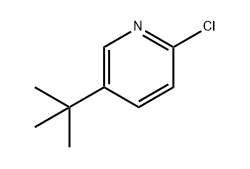
5-(tert-Butyl)-2-chloropyridine is an ideal intermediate primarily because of its versatile reactivity. The combination of the chlorine and tert-butyl groups provides chemists with a robust platform for selective substitution reactions, allowing fine-tuning of the molecular structure during synthesis. The tert-butyl group, in particular, enhances its steric stability, which can be a huge advantage when synthesizing larger, more complex molecules.
From my experience, the ability to control reactivity by simply modifying these groups has made 5-(tert-Butyl)-2-chloropyridine a go-to choice for synthesis of specialized compounds. Its chemical stability and predictable reaction pathways give it a leg up over other intermediates, particularly in environments where precision is key.
How Does 5-(tert-Butyl)-2-chloropyridine Improve Substitution Reactions?
One of the most impressive aspects of 5-(tert-Butyl)-2-chloropyridine is how it improves substitution reactions. Its structure allows for selective halogen exchange reactions that are vital in synthesizing complex molecules. For example, in pyridine-based pharmaceuticals, you often need to replace halogen atoms with different functional groups. Thanks to its sterically hindered tert-butyl group, 5-(tert-Butyl)-2-chloropyridine is highly effective in minimizing side reactions and ensuring clean product formation.
This selectivity, combined with its relatively low reactivity toward nucleophiles, makes this compound perfect for applications in organocatalysis, where control over functional group position is crucial. For researchers, this means fewer by-products and a more efficient path toward obtaining the desired end-products.
Why is 5-(tert-Butyl)-2-chloropyridine Important in Organocatalysis?
Organocatalysis has become a key method for achieving highly selective chemical transformations, and 5-(tert-Butyl)-2-chloropyridine plays a significant role in this field. As a catalyst, it facilitates reactions that would be difficult or less efficient under traditional conditions. For instance, in asymmetric synthesis, the stereochemical control offered by the tert-butyl group allows for the selective formation of specific enantiomers, which is incredibly important in drug discovery.
My personal experience shows that using 5-(tert-Butyl)-2-chloropyridine in organocatalytic reactions significantly reduces the need for toxic metals while increasing the sustainability of the process. This feature has made it particularly attractive to companies developing green chemistry solutions.
How Does 5-(tert-Butyl)-2-chloropyridine Enhance Reaction Efficiency?
In addition to its chemical properties, 5-(tert-Butyl)-2-chloropyridine is valued for its reaction efficiency. The steric bulk of the tert-butyl group prevents unwanted interactions with other molecules, allowing reactions to proceed smoothly with high selectivity. This results in higher yields, fewer side reactions, and a cleaner final product.
In industrial settings where cost-effectiveness and time are crucial, the ability to perform reactions at lower temperatures and with fewer reagents thanks to this intermediate is invaluable. For newcomers, this means less trial and error in experiments, ultimately speeding up research timelines and improving scalability.
What Makes 5-(tert-Butyl)-2-chloropyridine Stand Out as an Intermediate?
So, what sets 5-(tert-Butyl)-2-chloropyridine apart from other intermediates? For one, its combination of electronic and steric properties makes it extremely versatile. The tert-butyl group contributes to its stability, while the chlorine atom allows for reactivity in a variety of reactions.
Its performance in selective synthesis, particularly in pharmaceutical and agrochemical applications, is unmatched by many other intermediates. The ability to control reactivity, along with ease of functionalization, makes it highly adaptable to a range of chemical processes. As a result, 5-(tert-Butyl)-2-chloropyridine has become an indispensable intermediate for researchers and industry professionals looking to optimize synthetic pathways.
In conclusion,
5-(tert-Butyl)-2-chloropyridine is much more than just a simple intermediate. Its steric stability, versatile reactivity, and ability to enhance reaction efficiency make it a go-to choice for chemists working in fields ranging from pharmaceuticals to materials science. Whether you're a researcher in need of precision synthesis or an industrial professional focused on scalability, this compound offers exceptional value.
When selecting an intermediate like 5-(tert-Butyl)-2-chloropyridine, quality matters. Sourcing from trusted suppliers like ChemPacific ensures consistent performance and high-quality results every time.
